SafetyMap

District-level city safety maps, stay-area guidance, and neighborhood summaries for travelers who want to choose better areas before booking.

© 2026 SafetyMap. All rights reserved.

HomeCitiesMethodologyRoadmapSupport
SafetyMap
Norway/Oslo
OverviewMapDistrict comparisonBooking GuideFAQ
Norway

Is Oslo Safe? Best Areas to Stay (2026 Guide)

Oslo scores 78.2 out of 100 for safety, placing it in the upper range for European capitals with low violent crime and reliable emergency services. For most visitors, this translates to minimal concern during daytime activities across the city center and residential areas.

Use this shortlist to choose an area first, then compare the exact district on the map. Oslo is generally safe, but pickpocketing is common in tourist areas.

Safety posture

Score range
60/100 to 92/100
Primary risk
pickpocketing, crowds, and tourist-targeted friction

Map signals

Stable districts: Frogner, Ullern, and Vestre Aker.

Night-risk check: Frogner, Ullern, and Vestre Aker.

Explore them on the map:

See safest areas on the map

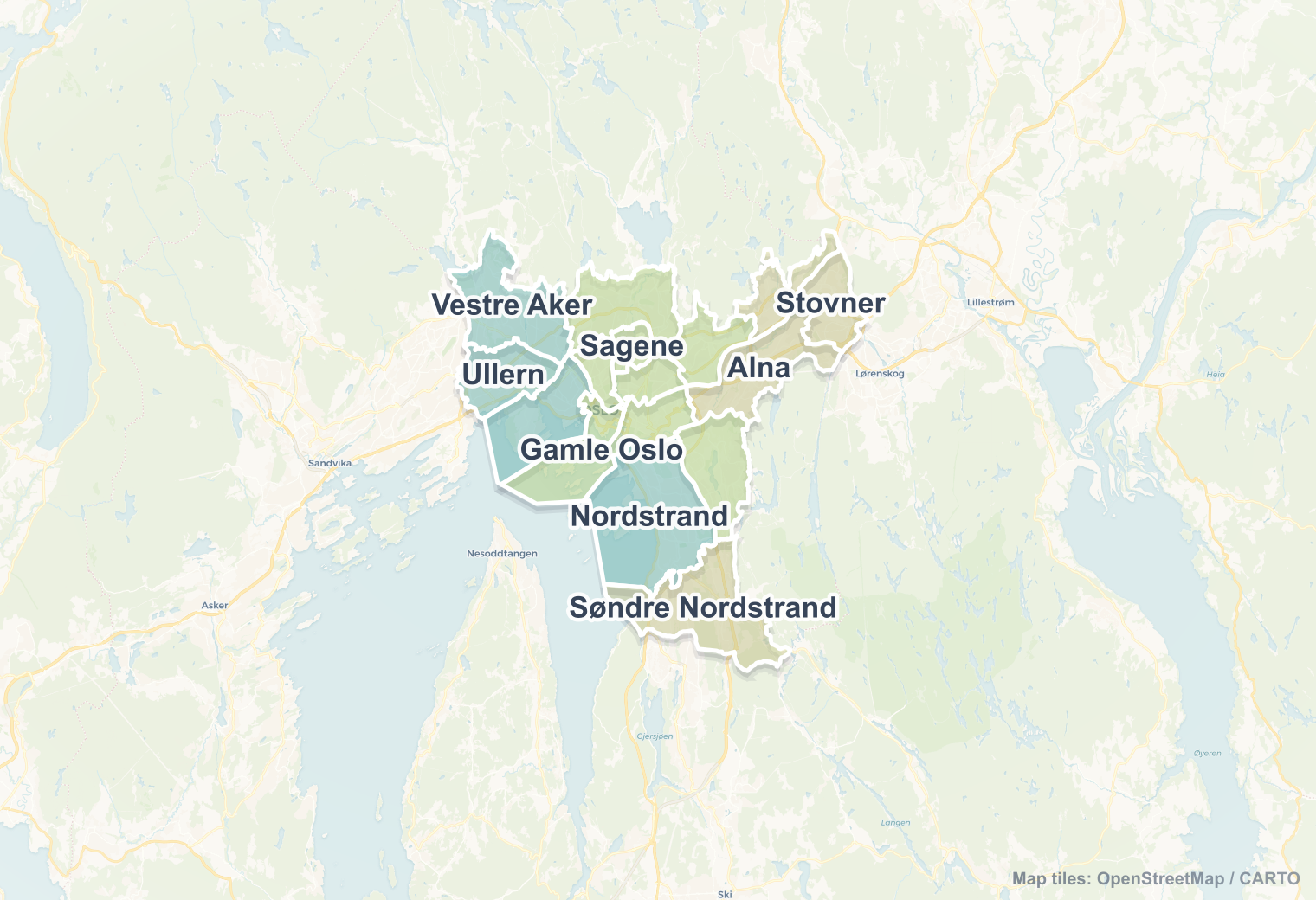
Oslo safety map

Tap a district to see its safety score and night risk level.

Oslo safety map showing safe areas and districts to check before booking
Excellent
Good
Use caution

Safety overview

City-level safety posture

Score range
60/100 to 92/100
Primary risk
pickpocketing, crowds, and tourist-targeted friction
Decision check
Frogner set the baseline, while Stovner needs stricter exact-address checks.

Stable districts

Stronger safety signals

Frogner - 92/100Ullern - 90/100Vestre Aker - 90/100

Night risk

Areas to check after dark

Frogner - night score 28/100Ullern - night score 30/100Vestre Aker - night score 30/100

Map of Oslo districts

Use the Oslo safety map to compare safety scores, night-risk signals, and the difference between stable districts and areas that need more caution.

Interactive map

Interactive district safety map of Oslo

Click a district to see details, compare scores, and avoid booking in weaker areas. District tooltips show the neighborhood name, and the detail panel updates instantly.

Safety districts

Active district

Frogner

Excellent | score 91

Oslo

Frogner

Excellent

Prestigious central-west district with parks, embassies, and upscale living.

Travel score

91

Safety

92

Transport

90

Community

91

Key strengths

  • Very safe and high-end area
  • Close to major attractions
  • Excellent transport

Points to consider

  • Expensive
  • Busy in tourist areas
  • Limited authenticity
SightseeingFamiliesBudget staysNightlife
Open full district profileAdd your opinion

District ranking

16 results

District Comparison

District comparison in Oslo

Choose two districts and compare them side by side before booking. The tool highlights overall score, safety, transport, accommodation, night risk, and the practical trade-offs that matter most for a stay base.

ExpandCollapse
DistrictSafetyVibeBest for
Frogner92/100LivelyFamilies
Ullern90/100LocalFamilies
Vestre Aker90/100LocalFamilies
Nordstrand90/100LocalFamilies
St. Hanshaugen88/100LocalFamilies

Frogner

Travel score 91/100

Excellent

Prestigious central-west district with parks, embassies, and upscale living.

SightseeingFamiliesBudget stays

Strengths

  • + Very safe and high-end area
  • + Close to major attractions
  • + Excellent transport

Watch-outs

  • - Expensive
  • - Busy in tourist areas
  • - Limited authenticity
Open Frogner

Ullern

Travel score 90/100

Excellent

Upscale western residential area with villas and proximity to fjord.

FamiliesBudget stays

Strengths

  • + One of the safest areas in Oslo
  • + High-quality residential environment
  • + Close to waterfront

Watch-outs

  • - Expensive
  • - Quiet and low nightlife
  • - Less central
Open Ullern
MetricFrognerUllernGap

Overall travel score

Best single read for choosing a low-friction tourist base.

91/10090/100Frogner +1

Safety

How comfortable the area is likely to feel for a typical visitor.

92/10090/100Frogner +2

Sightseeing convenience

Access to major attractions, useful streets, and visitor-friendly movement.

85/10060/100Frogner +25

Transport

How easy it is to arrive, leave, and move around the city.

90/10075/100Frogner +15

Accommodation

Hotel and apartment practicality for a short stay.

90/10075/100Frogner +15

Night risk

Lower is better. Use this when late returns matter.

28/10030/100Frogner +2

Community signal

Extra signal from user reviews where enough data exists.

91/10090/100Frogner +1

Safety Guide

Oslo safety overview

Oslo scores 78.2 out of 100 for safety, placing it in the upper range for European capitals with low violent crime and reliable emergency services. For most visitors, this translates to minimal concern during daytime activities across the city center and residential areas.

The primary risk pattern in Oslo is not street crime but night-time comfort, with 69% of districts scoring low after dark due to reduced foot traffic, poor lighting in suburban areas, and limited late-night transport frequency. Visitors staying in outer districts like Stovner or Alna face longer, less comfortable return routes after evening events.

The 33-point spread between Oslo's best district (Frogner at 92) and its lowest-rated area (Stovner at 60) is significant enough that accommodation choice directly impacts your daily comfort level. Staying in Frogner or Vestre Aker versus Grorud or Alna means measurably different experiences in walkability, transport access, and evening confidence.

Oslo safety guide

Frogner, with a safety score of 92 and transport rating of 90, represents Oslo at its most functional—central location near Vigeland Park, consistent police presence, well-lit streets, and tram access that runs until midnight. Booking here removes most logistical friction from your stay.

In Oslo, the difference between an 80+ district and a 60-70 area is primarily about isolation rather than danger—lower-scoring districts like Grorud (65) or Alna (62) are safe during the day but require bus connections that thin out after 10 PM, making late returns more tedious than risky. You won't face serious threats, but you will face longer waits and darker walks from transit stops.

Many visitors assume all of Oslo maintains the same Nordic safety standard throughout, but the data shows clear stratification: industrial eastern districts and outer northeastern suburbs have noticeably weaker infrastructure and longer emergency response patterns than the central and western zones.

Read risk by district in Oslo

Safety risk in Oslo concentrates in a horseshoe pattern around the northeastern and eastern edges—Stovner, Grorud, and Alna—while the central, western, and southern districts maintain consistently high scores. The inner city and waterfront areas show minimal variation.

The 69% night risk figure means that 11 of Oslo's 16 districts drop below comfortable thresholds after dark, not due to crime spikes but because of sparse lighting, reduced surveillance, and infrequent transit in suburban residential zones. Even moderately rated districts like Nordstrand (safety 90) score just 30 for night comfort due to spread-out housing and minimal street activity.

Grorud (safety 65) earns its caution flag for a combination of dense residential blocks with limited commercial activity and longer police response times in the forested periphery. Alna (62) is flagged for industrial zones with poor pedestrian infrastructure and uneven lighting. Stovner (60), Oslo's lowest-rated district, combines high-density housing with social service strain and the longest average distance to central emergency resources.

Oslo at night

Night safety in Oslo divides sharply by geography: central areas like Sentrum, Frogner, and St. Hanshaugen remain well-populated and well-lit until midnight, while outer districts become quiet and poorly connected after 10 PM. The issue is isolation and inconvenience rather than elevated crime risk.

For evening logistics, plan arrivals before 9 PM if staying outside zones 1-2, as bus frequency to districts like Stovner or Alna drops to 30-minute intervals and some routes stop entirely by 11 PM. Solo returns are safe but can involve long walks from bus stops through unlit residential streets—factor this into accommodation decisions if you plan frequent late nights.

The night score data reveals that even Oslo's safest residential districts like Nordstrand and Vestre Aker score poorly (30) for night comfort due to their suburban layout, meaning that a high overall safety rating does not guarantee convenient or comfortable late-night access. If evening mobility matters, prioritize transport scores over safety scores when comparing districts.

Other cities in Norway

Compare Oslo with other city safety maps and where-to-stay guides in the same country. If you are also visiting Bergen, check where to stay in Bergen.

Bergen

Open the where-to-stay guide and district ranking for Bergen.

Stavanger

Open the where-to-stay guide and district ranking for Stavanger.

Trondheim

Open the where-to-stay guide and district ranking for Trondheim.

Read risk by district

Do not reduce Oslo to one safe/unsafe label. Compare the score range, night-risk pattern, and exact district profile before judging the stay area.

A lower score usually means less margin for a weak street, late return, or poorly connected address.

FAQ

Oslo safety FAQ

Is it safe to stay in Grorud or Stovner as a tourist?

Grorud (safety 65) and Stovner (safety 60) are safe during the day but present logistical challenges rather than safety threats—longer commutes to attractions, limited late-night transport, and sparse street activity after dark. You won't face significant crime risk, but you will spend more time and effort on basic travel logistics compared to staying in Frogner or central Oslo.

Why does Oslo have high safety scores but poor night ratings?

Oslo's 78.2 safety score reflects low crime rates and strong infrastructure, but 69% of districts score low at night because suburban areas have minimal street activity, infrequent late-night buses, and poor lighting in residential zones. The issue is comfort and convenience after 10 PM, not crime—most districts simply become isolated rather than dangerous.

Which Oslo districts are best for solo travelers arriving late?

Frogner (transport 90), Sentrum, and St. Hanshaugen offer the most reliable late-night access with tram lines running until midnight and consistent taxi availability. Nordstrand and Vestre Aker have excellent safety scores (90) but lower transport ratings (70-75) and night scores (30), meaning late arrivals require longer, less frequent bus connections or taxi rides.

What does the 33-point score spread mean for booking decisions in Oslo?

The gap between Frogner (92) and Stovner (60) represents a measurable difference in daily experience—central and western districts provide walkable access, frequent transport, and lit evening streets, while outer northeastern areas require more planning for basic logistics. If your budget allows, staying in the 80+ scored districts reduces friction significantly, especially if you plan evening activities or have early/late flights.