SafetyMap

District-level city safety maps, stay-area guidance, and neighborhood summaries for travelers who want to choose better areas before booking.

© 2026 SafetyMap. All rights reserved.

HomeCitiesMethodologyRoadmapSupport
SafetyMap
Germany/Berlin
OverviewMapDistrict comparisonBooking GuideFAQ
Germany

Berlin Safety Map: best areas to stay in 2026

Berlin's overall safety score of 78.8/100 places it in the safe category for major European capitals, meaning most visitors experience no serious incidents during their stay. This is a large, functioning city where violent crime against tourists is rare, but opportunistic theft and crowding issues are part of daily reality in central areas.

Use this shortlist to choose an area first, then compare the exact district on the map. Berlin is generally safe, but pickpocketing is common in tourist areas.

Safety posture

Score range
60/100 to 92/100
Primary risk
pickpocketing, crowds, and tourist-targeted friction

Map signals

Stable districts: Steglitz-Zehlendorf, Charlottenburg-Wilmersdorf, and Treptow-Köpenick.

Night-risk check: Steglitz-Zehlendorf, Charlottenburg-Wilmersdorf, and Treptow-Köpenick.

Explore them on the map:

See safest areas on the map

Berlin safety map

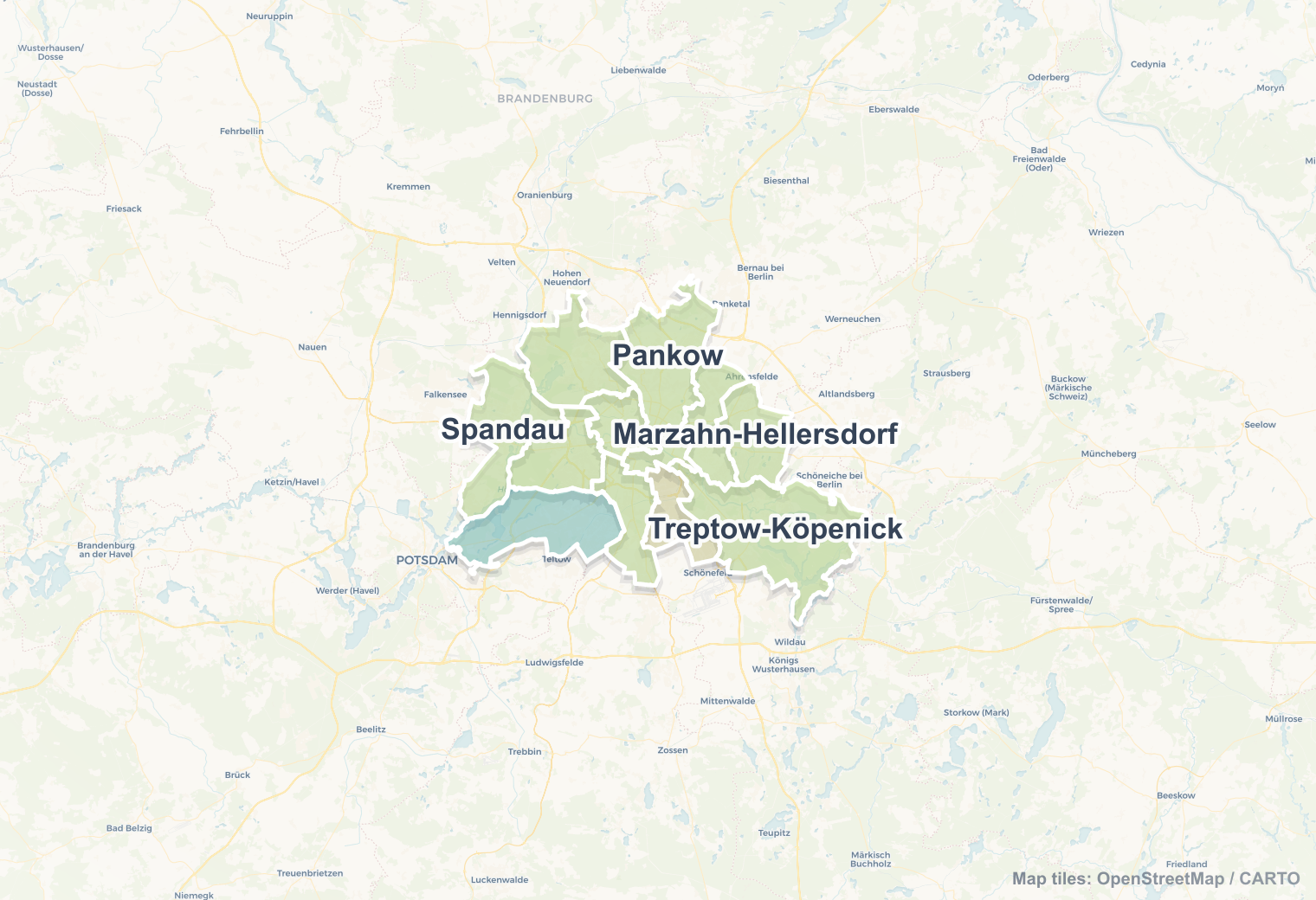
Tap a district to see its safety score and night risk level.

Berlin safety map showing safe areas and districts to check before booking
Excellent
Good
Use caution

Safety overview

City-level safety posture

Score range
60/100 to 92/100
Primary risk
pickpocketing, crowds, and tourist-targeted friction
Decision check
Steglitz-Zehlendorf set the baseline, while Neukölln needs stricter exact-address checks.

Stable districts

Stronger safety signals

Steglitz-Zehlendorf - 92/100Charlottenburg-Wilmersdorf - 88/100Treptow-Köpenick - 88/100

Night risk

Areas to check after dark

Steglitz-Zehlendorf - night score 28/100Charlottenburg-Wilmersdorf - night score 32/100Treptow-Köpenick - night score 32/100

Map of Berlin districts

Use the Berlin safety map to compare safety scores, night-risk signals, and the difference between stable districts and areas that need more caution.

Interactive map

Interactive district safety map of Berlin

Click a district to see details, compare scores, and avoid booking in weaker areas. District tooltips show the neighborhood name, and the detail panel updates instantly.

Safety districts

Active district

Steglitz-Zehlendorf

Excellent | score 90

Berlin

Steglitz-Zehlendorf

Excellent

Affluent southwestern district of Berlin, known for villas, lakes (like Wannsee), and green spaces. Very residential, quiet, and upscale.

Travel score

90

Safety

92

Transport

80

Community

90

Key strengths

  • Very high safety level (one of the safest districts in Berlin)
  • Clean, green, and well-maintained
  • Calm and low noise
  • High-quality residential environment

Points to consider

  • Far from central attractions (~25–40 min)
  • Limited nightlife
  • Not tourist-focused
  • Requires transport for most activities
FamiliesBudget stays
Open full district profileAdd your opinion

District ranking

12 results

ExpandCollapse

District Comparison

District comparison in Berlin

Choose two districts and compare them side by side before booking. The tool highlights overall score, safety, transport, accommodation, night risk, and the practical trade-offs that matter most for a stay base.

ExpandCollapse
DistrictSafetyVibeBest for
Steglitz-Zehlendorf92/100LocalFamilies
Mitte75/100LivelyNightlife
Charlottenburg-Wilmersdorf88/100LivelyFamilies
Treptow-Köpenick88/100LocalFamilies
Pankow87/100LocalFamilies

Steglitz-Zehlendorf

Travel score 90/100

Excellent

Affluent southwestern district of Berlin, known for villas, lakes (like Wannsee), and green spaces. Very residential, quiet, and upscale.

FamiliesBudget stays

Strengths

  • + Very high safety level (one of the safest districts in Berlin)
  • + Clean, green, and well-maintained
  • + Calm and low noise

Watch-outs

  • - Far from central attractions (~25–40 min)
  • - Limited nightlife
  • - Not tourist-focused
Open Steglitz-Zehlendorf

Mitte

Travel score 88/100

Good

Mitte w Berlin ma dobry profil ogolny, chociaz slabsza strona pozostaje komfort wieczorem.

SightseeingBudget staysNightlife

Strengths

  • + Prime location → all major attractions nearby
  • + Excellent transport connectivity
  • + Huge choice of hotels, restaurants, and bars

Watch-outs

  • - Higher crime than most districts in Berlin
  • - Pickpocketing, scams, and street issues (especially Alexanderplatz)
  • - Crowded and chaotic
Open Mitte
MetricSteglitz-ZehlendorfMitteGap

Overall travel score

Best single read for choosing a low-friction tourist base.

90/10088/100Steglitz-Zehlendorf +2

Safety

How comfortable the area is likely to feel for a typical visitor.

92/10075/100Steglitz-Zehlendorf +17

Sightseeing convenience

Access to major attractions, useful streets, and visitor-friendly movement.

65/100100/100Mitte +35

Transport

How easy it is to arrive, leave, and move around the city.

80/10098/100Mitte +18

Accommodation

Hotel and apartment practicality for a short stay.

75/10090/100Mitte +15

Night risk

Lower is better. Use this when late returns matter.

28/10045/100Steglitz-Zehlendorf +17

Community signal

Extra signal from user reviews where enough data exists.

90/10088/100Steglitz-Zehlendorf +2

Safety Guide

Berlin safety overview

Berlin's overall safety score of 78.8/100 places it in the safe category for major European capitals, meaning most visitors experience no serious incidents during their stay. This is a large, functioning city where violent crime against tourists is rare, but opportunistic theft and crowding issues are part of daily reality in central areas.

The primary risk pattern in Berlin is pickpocketing and tourist-targeted friction in crowded locations—transport hubs, major attractions, and busy shopping streets see the most incidents. You're dealing with professional thieves working crowds rather than aggressive confrontation, so awareness in packed U-Bahn cars and around Brandenburg Gate or Alexanderplatz matters more than fear of walking around.

The 21-point spread between Berlin's best and worst districts is moderate, meaning district choice has a noticeable but not dramatic impact on your safety experience. You won't find extreme danger zones, but picking between a 92-rated residential area and a 60-rated gentrifying district does change your daily comfort level and evening options.

Berlin safety guide

Steglitz-Zehlendorf in southwest Berlin scores 92 for safety, the city's highest, and staying here means a quiet, residential experience with minimal street-level risk and almost no tourist crime. The tradeoff is distance from nightlife and central attractions, plus a lower transport score of 80 compared to more central options.

In Berlin, an 80+ safety score typically means well-maintained areas with visible infrastructure and little street harassment, while 60-70 scores indicate grittier environments with more visible poverty, social tension, and higher pickpocketing risk on public transport. The practical difference is how comfortable you feel walking at dusk and whether you think twice about your phone on the S-Bahn.

Many visitors assume Mitte is unsafe because it's central and busy, but it scores 75 for safety with excellent 98-rated transport—the real issue there isn't danger but crowds and tourist-targeting, not random violence. The district that actually warrants caution is Neukölln at 60, which visitors often stumble into thinking it's just another trendy area without recognizing the rougher zones mixed in.

Read risk by district in Berlin

Safety risk across Berlin's 12 districts is relatively spread out rather than concentrated in one or two problem areas, with only Neukölln flagged for caution and most others falling in the good-to-excellent range. This distribution means you can stay in multiple districts comfortably, but you're not dealing with a city of stark safety borders.

Night risk is Berlin's weak point: 75% of districts score low after dark, meaning even safe daytime areas like Steglitz-Zehlendorf (night score 28) and Charlottenburg-Wilmersdorf (night score 32) become notably less comfortable for walking around late. Mitte does better at 45 for night safety, but that's still mediocre and reflects empty streets in government quarters rather than lively safety.

Neukölln is flagged for caution with a safety score of 60 due to its sharp social contrasts—gentrified cafe strips sit blocks away from rough urban zones with higher crime rates and street tension. The district is rapidly changing, which creates unpredictable pockets where visitors can feel unwelcome or exposed, especially after dark when the hipster crowds thin out.

Berlin at night

Night safety in Berlin is genuinely limited across most of the city, with 75% of districts scoring low after dark—this isn't hysteria but a reflection of empty residential streets, poorly lit areas, and reduced public presence once evening sets in. Mitte and transport hubs stay active and reasonably safe for moving through, but wandering residential Steglitz-Zehlendorf or western Charlottenburg-Wilmersdorf at midnight feels isolated despite high daytime scores.

For evening logistics, plan return routes through well-connected transport lines rather than walking long distances, especially if staying outside Mitte—Berlin's excellent 83.2/100 transport score means night buses and U-Bahn lines run frequently and are safer than empty sidewalks. Solo returns are manageable if you stick to main stations and avoid transferring through deserted stops, but late arrivals at airports should use direct transport to accommodation rather than exploring on foot.

The data reveals that Berlin's night risk doesn't correlate with daytime safety scores—Steglitz-Zehlendorf is the safest district overall but scores just 28 at night, meaning booking there for safety gives you excellent daytime comfort but potential isolation after dark. If nightlife access matters, Mitte's 45 night score and central location make it a better base despite its lower 75 daytime safety rating.

Other cities in Germany

Compare Berlin with other city safety maps and where-to-stay guides in the same country. If you are also visiting Cologne, check where to stay in Cologne.

Cologne

Open the where-to-stay guide and district ranking for Cologne.

Dusseldorf

Open the where-to-stay guide and district ranking for Dusseldorf.

Frankfurt

Open the where-to-stay guide and district ranking for Frankfurt.

Hamburg

Open the where-to-stay guide and district ranking for Hamburg.

Hanover

Open the where-to-stay guide and district ranking for Hanover.

Munich

Open the where-to-stay guide and district ranking for Munich.

Nuremberg

Open the where-to-stay guide and district ranking for Nuremberg.

Stuttgart

Open the where-to-stay guide and district ranking for Stuttgart.

Read risk by district

Do not reduce Berlin to one safe/unsafe label. Compare the score range, night-risk pattern, and exact district profile before judging the stay area.

A lower score usually means less margin for a weak street, late return, or poorly connected address.

FAQ

Berlin safety FAQ

Is pickpocketing really that common in Berlin?

Yes, pickpocketing is Berlin's primary visitor-facing crime and happens frequently on crowded U-Bahn and S-Bahn lines, at Alexanderplatz, Brandenburg Gate, and major tourist sites. Professional thieves work in teams during rush hours and target distracted tourists with open bags or phones in back pockets, so keeping valuables secured and front-facing is necessary daily practice, not paranoia.

Should I avoid Neukölln entirely or just be careful?

You don't need to avoid Neukölln entirely, but recognize it's the only Berlin district flagged for caution with a 60 safety score due to sharp contrasts between gentrified areas and rough zones. Stick to known cafe strips and main streets during daytime visits, avoid wandering residential blocks after dark, and don't assume the whole district has the trendy vibe you see in travel blogs—some parts feel genuinely unwelcoming.

Why does Steglitz-Zehlendorf score so low at night if it's the safest district?

Steglitz-Zehlendorf scores just 28 for night safety despite a 92 daytime rating because it's a sprawling, residential, villa-filled area with few people on the streets after dark and limited commercial activity—this creates isolation rather than danger, but walking around feels uncomfortable and empty. The low night score reflects lack of activity and lighting, not crime, but the practical effect is the same: you won't want to be out wandering.

Is Berlin safe enough to walk around freely or should I always use transport?

Berlin is safe enough to walk around freely during the day in most districts, with a 78.8/100 overall score meaning serious incidents are uncommon. After dark, the calculation changes—75% of districts score low at night, so switching to Berlin's excellent 83.2-rated transport system for longer distances after evening makes sense, especially outside Mitte where streets empty out quickly.